Clinical workflow
A patient describes new double vision.
OptoGuide™ starts with the diplopia pattern, not guesswork — separate monocular from binocular double vision, capture the neuro red flags, and escalate the acute presentations that need urgent assessment.
Structured for Australian optometry practice. Source-cited clinical reference; not individually clinician-reviewed.
Clinical decision support only
Red flags: assess urgently before anything else
New acute binocular diplopia that is unexplained or neurologically suspicious supports same-day or urgent referral.
- Acute binocular diplopia with headache or neurological symptoms.
- Pupil involvement, ptosis, or painful eye movements.
- New limitation of ductions or an incomitant deviation.
- Associated facial weakness, ataxia, or sensory symptoms.
- Orbital pain, proptosis, or lid swelling.
One connected workflow, not separate lookups
Recognition, management, prescribing, and referral usually live in different tools. In OptoGuide™ they are one path, and each step hands off to the next so the decision keeps moving.
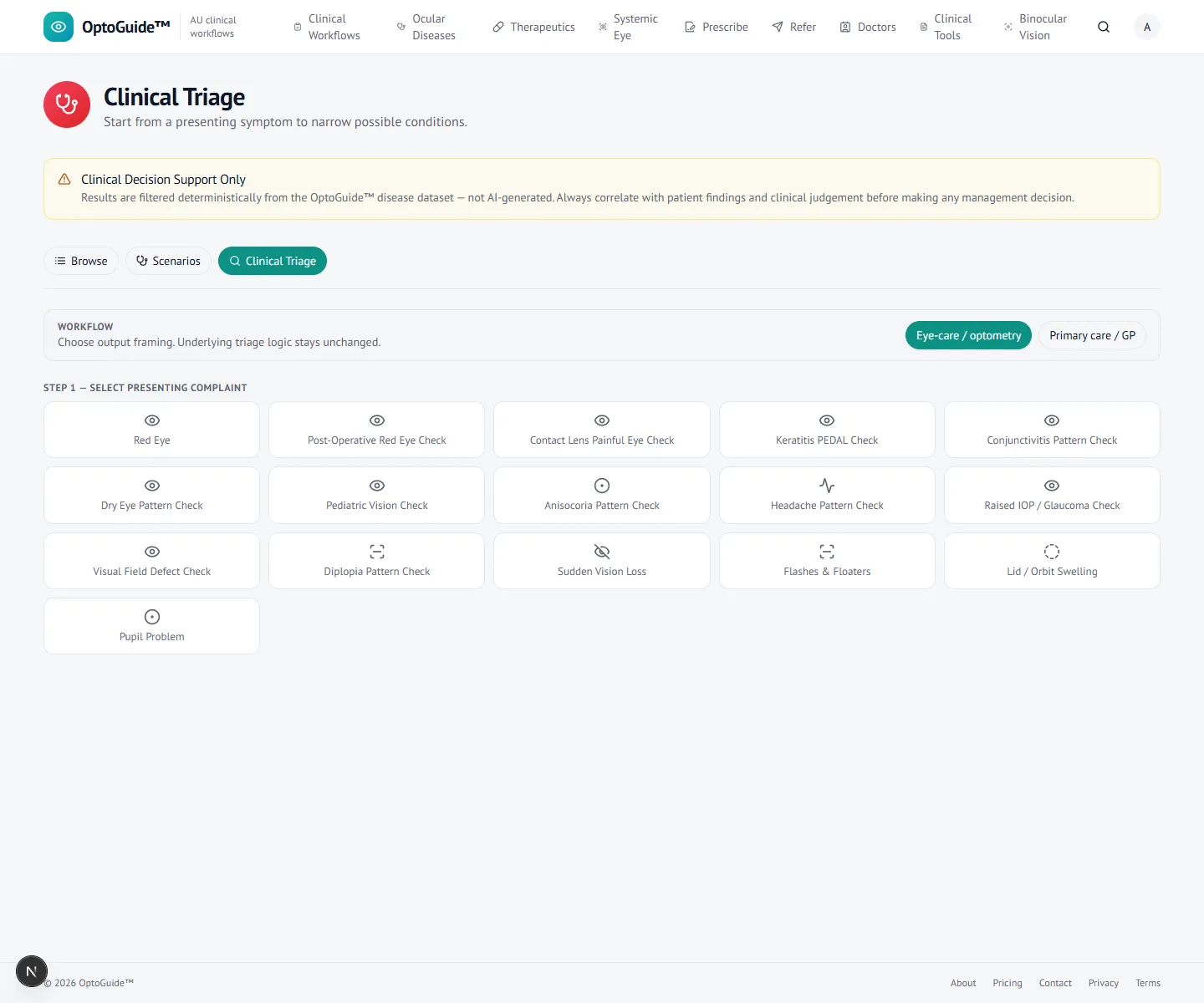
Step 1
Start with the diplopia pattern
Classify the double vision before chasing a cause. The first question — does it resolve when either eye is covered — separates monocular from binocular diplopia.
- Monocular diplopia persists with one eye covered and is usually optical.
- Binocular diplopia resolves when either eye is covered and is the neuro-ophthalmic concern.
- Note direction (horizontal / vertical), onset, and distance vs near.
Step 2
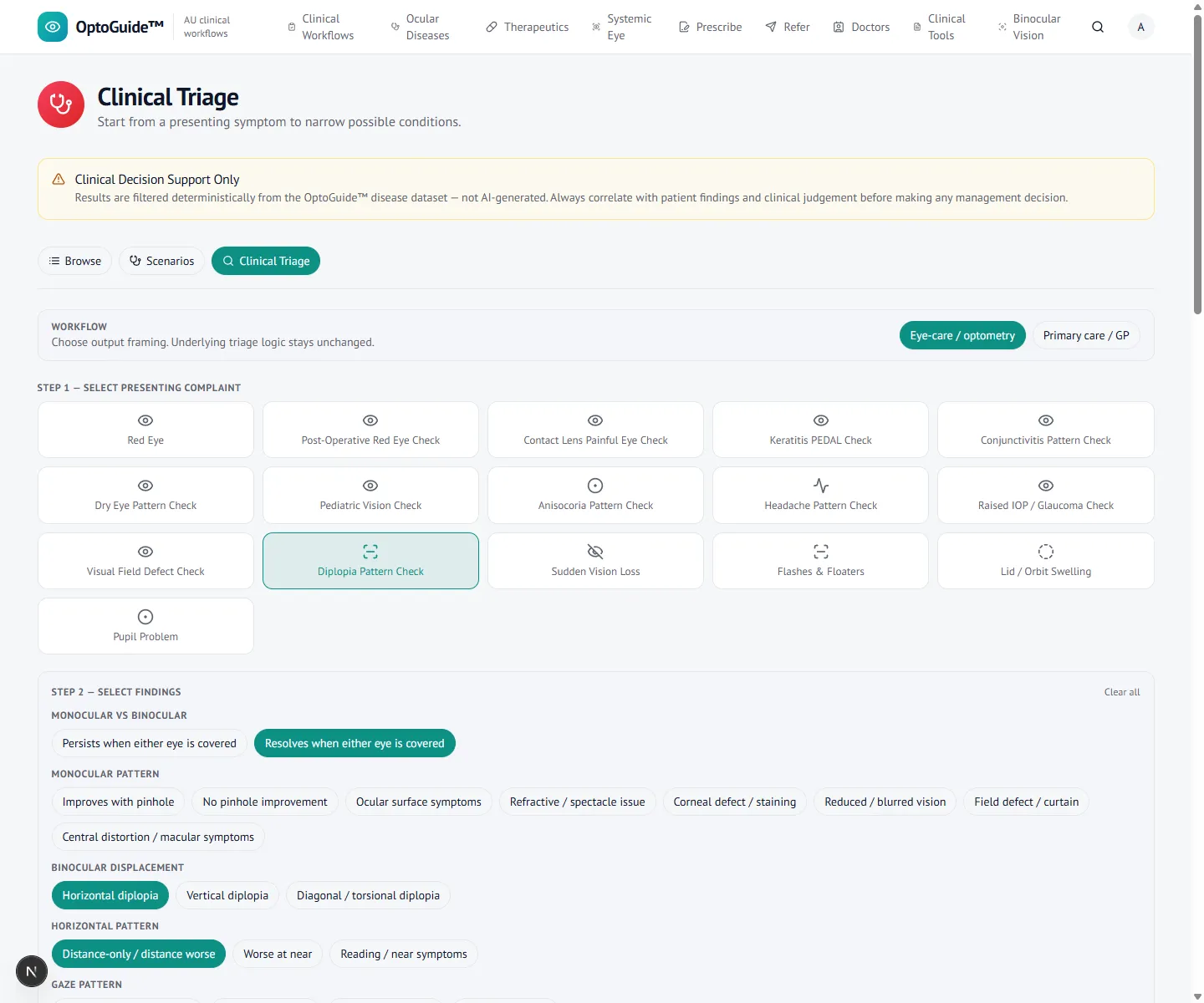
Capture the neuro red flags
Capture the motility and neurological cues that change urgency — an abduction deficit, incomitance, vascular risk factors, headache, or associated neurology.
- A horizontal deficit worse at distance can reflect a sixth nerve palsy.
- Pupil involvement or ptosis with diplopia is a red-flag combination.
- Acute onset with vascular risk factors is captured explicitly.
Step 3
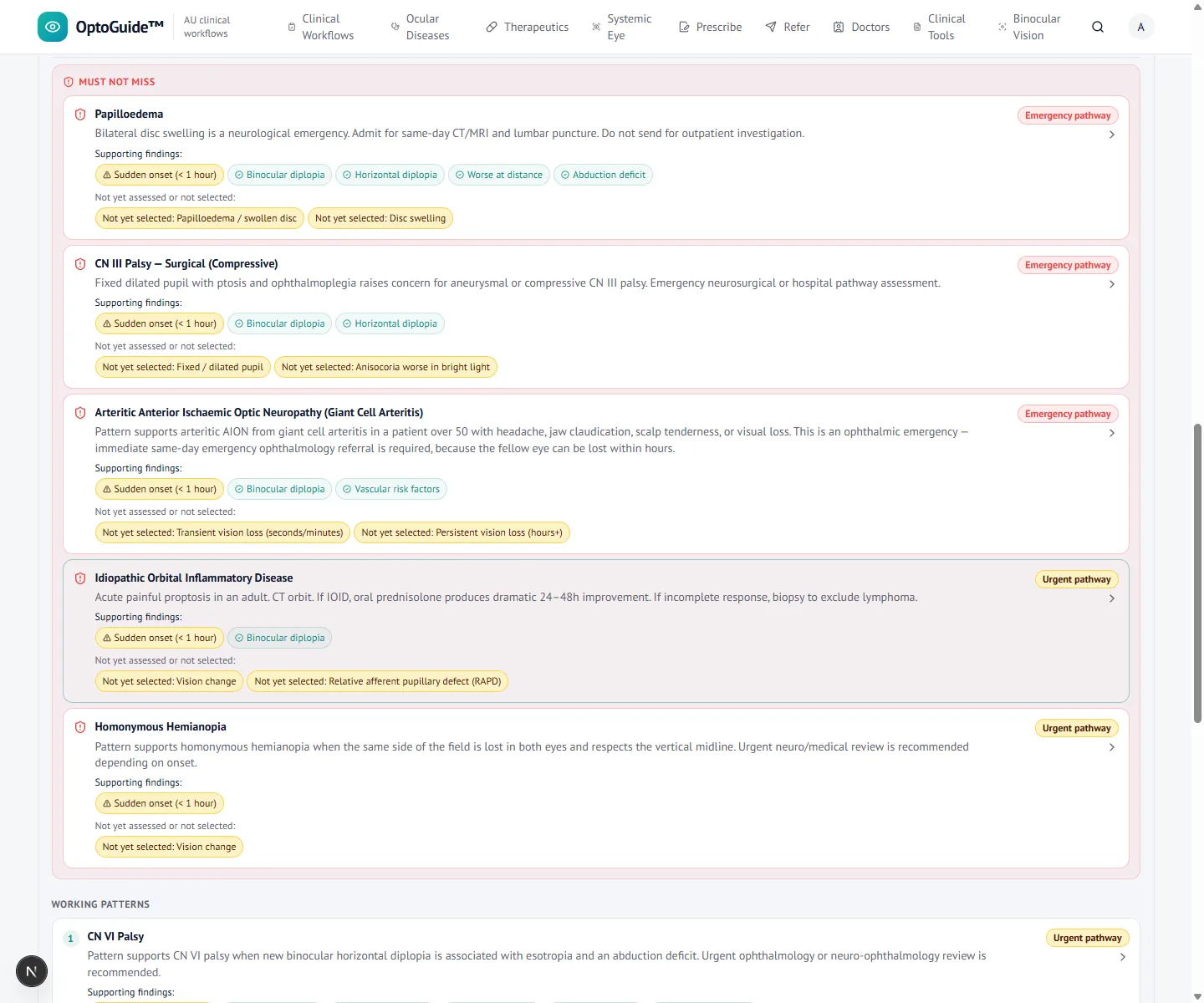
Keep acute neuro causes separate
A deterministic result keeps acute neuro diplopia out of the routine binocular-vision pile, surfacing cranial nerve palsies and must-not-miss causes.
- Routine BV imbalance and acute neuro diplopia are not mixed together.
- Must-not-miss neuro causes are held visible for escalation.
Step 4
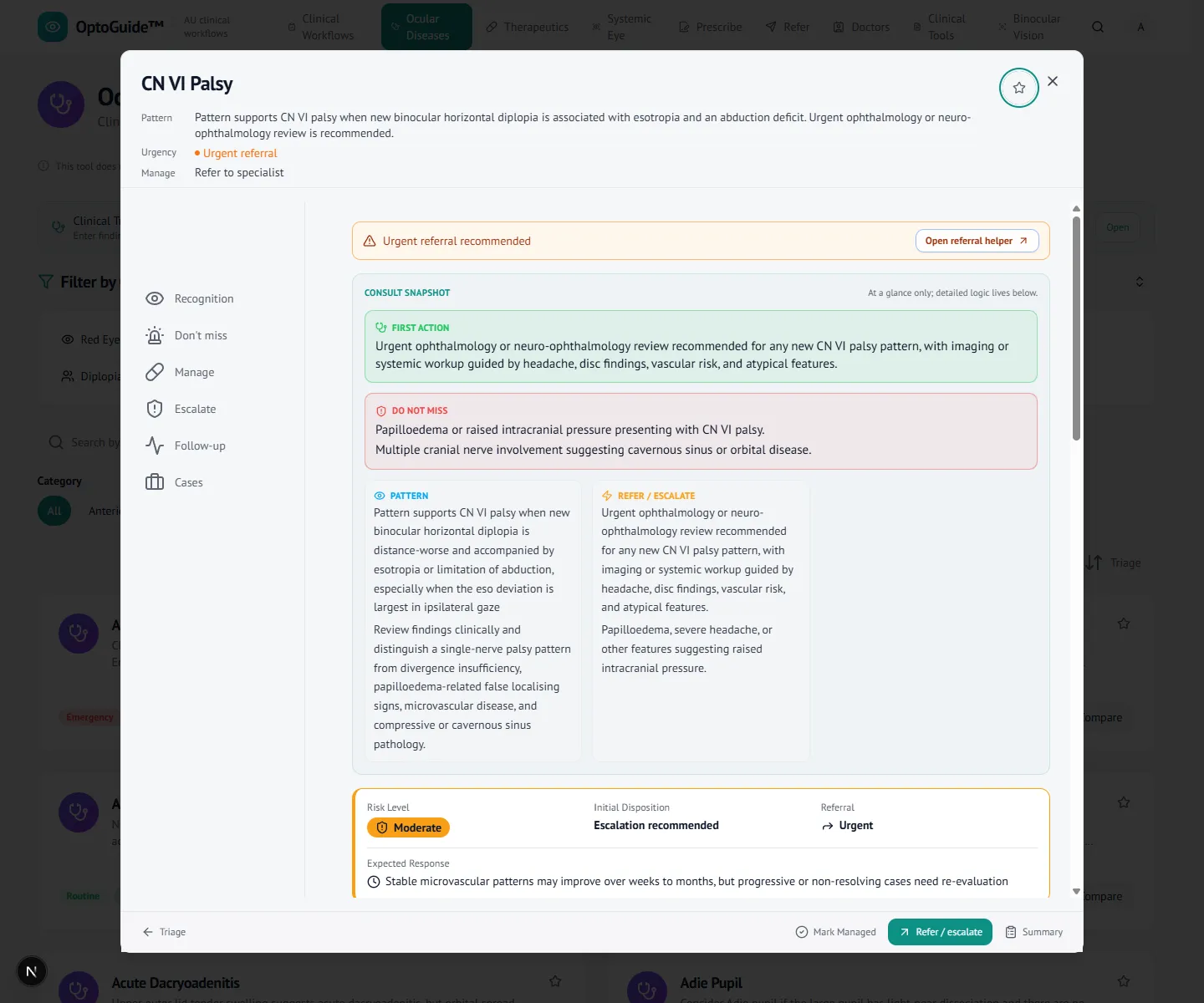
Open the action workflow
Open the fitting condition for structured recognition and referral cues. New acute binocular diplopia is escalated rather than observed without explanation.
- Recognition and escalation framing are conservative — no cause is asserted.
- Document motility findings and any neurological association clearly.
Step 5
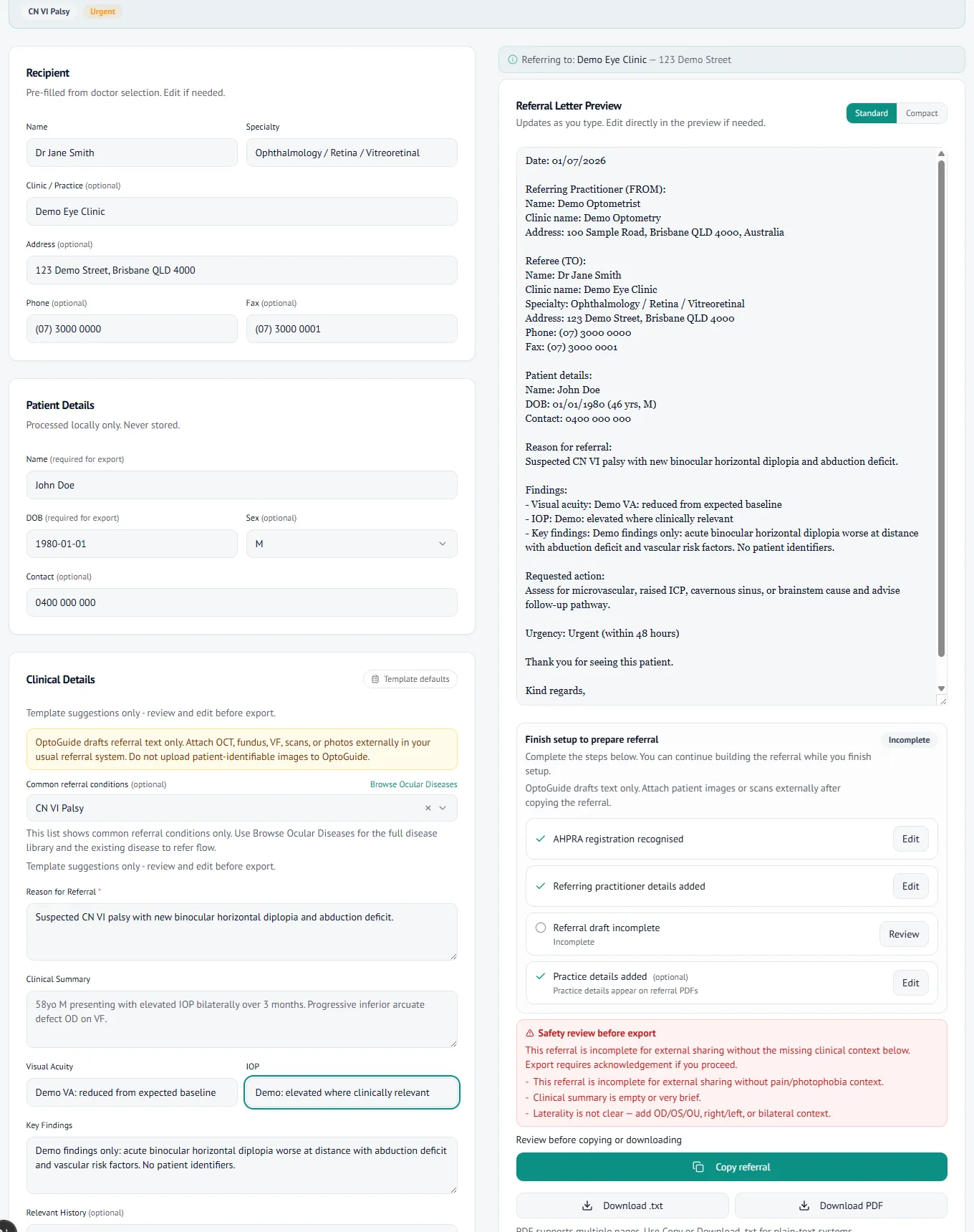
Draft an urgent referral
Draft an urgent neuro-ophthalmic referral from the workflow, with urgency prefilled and findings clinician-entered. The letter is generated for you to review and copy.
- Urgent neuro-ophthalmology wording from the clinical pathway.
- Copy-first output for your existing systems. No patient data is stored.
Clinical basis
This guidance reflects standard optometric clinical reasoning based on:
- Australian optometry clinical practice patterns
- Australian medicines regulation and PBS prescribing context
- Common ophthalmology referral standards
- Evidence-based clinical training and practice
Start the next case of double vision with the pattern.
Free 14-day full-access trial. No credit card required.